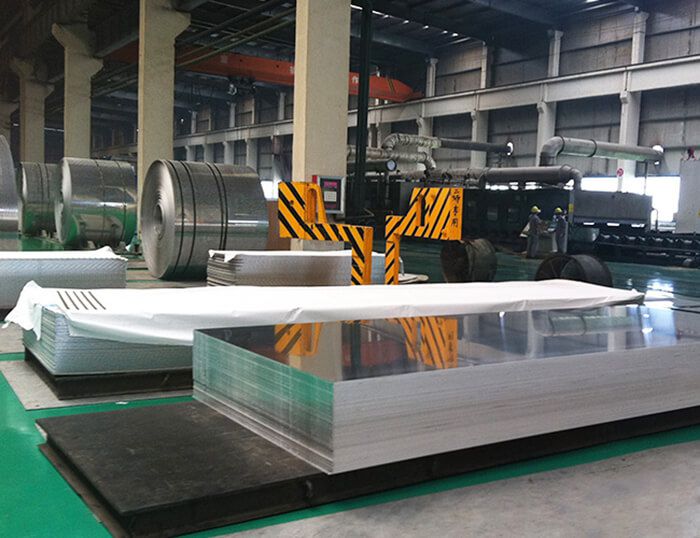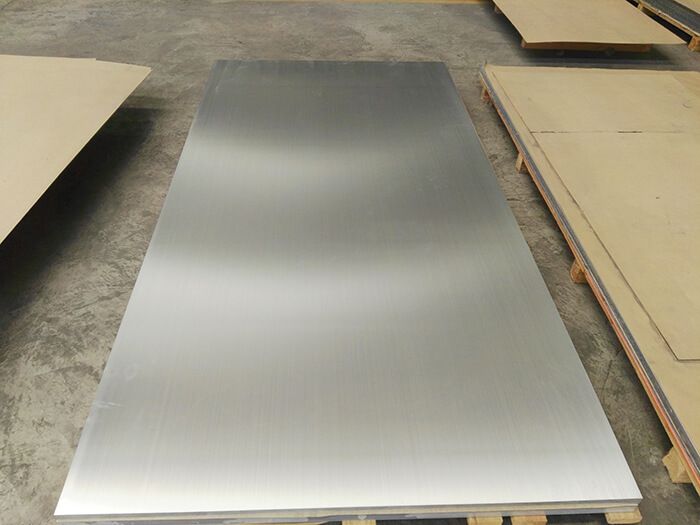

As an Al-Mg-Si aluminum alloy, 6063 aluminum alloy uses magnesium and silicon as its main alloying elements, contains no heavy metals, and is stable and environmentally friendly. It possesses good plasticity and corrosion resistance.
It is not only easily processed into profiles with complex cross-sections through extrusion and forging, but also maintains good structural stability under natural environments or specific working conditions. This is the key reason why it can be used across various fields such as aerospace components, building profiles, and electronic casings.
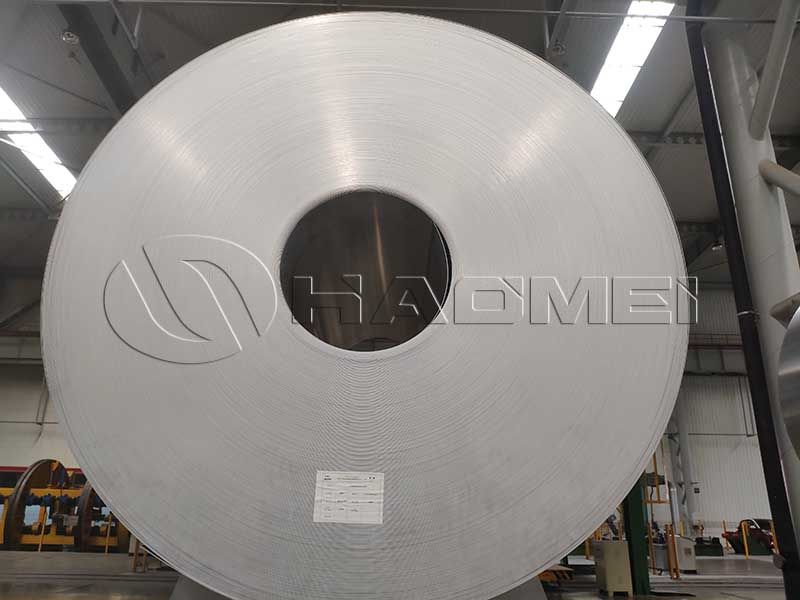
The core process of 6063 T5 aluminum is "high-temperature extrusion + natural aging." The advantage of this process is its simplicity and low production cost, making it suitable for mass production.
The aluminum 6063 t6 is a strengthening process of "high-temperature extrusion + artificial aging." This secondary strengthening process of "quenching + artificial aging" maximizes the potential of the alloy's mechanical properties.
The difference in processes is directly reflected in the 6063t5 and Al 6063 t6 properties, which is also the core difference between them. According to industry standards for aerospace aluminum alloys, the key performance indicators of the two are compared as follows:
- Tensile Strength: The tensile strength of T5 temper is typically between 180-220 MPa, while that of T6 temper reaches 260-300 MPa, an increase of approximately 30%-40%. This means that T6 material can withstand greater tensile force without breaking.
- Yield Strength: Yield strength represents a material's ability to resist plastic deformation. T5 temper yield strength is approximately 110-140 MPa, while T6 temper yields a much higher 240-260 MPa, more than doubling. This means that under the same pressure, T6 material is less prone to permanent deformation and has stronger structural stability.
- Hardness (Brinell Hardness HB): The hardness of T5 temper is approximately 50-60 HB, while that of T6 temper increases to 80-90 HB. When scratched with a hard object, the surface of T6 is less likely to leave a mark, exhibiting superior wear resistance.
It's important to note that the increased strength and hardness come at a cost: the elongation (a measure of material plasticity) of the T6 temper is slightly lower than that of the T5 temper (T5 elongation is approximately 8%-12%, T6 approximately 5%-8%). In other words, 6063 T6 aluminum is slightly more "hard and brittle," while T5 is more "flexible."
From a machining perspective, the T5 temper has an advantage. Due to its improved plasticity after natural aging, it is less prone to cracking or breakage during secondary processing such as drilling, bending, and welding. This makes it easier to process and suitable for manufacturing complex shapes requiring multiple processing steps, such as brackets and connectors in aerospace equipment.
On the other hand, the T6 temper, with its high strength and slightly lower plasticity, requires higher machining precision and greater processing force. Welding also requires temperature control to prevent performance degradation. It is more suitable for machining relatively simple shapes with extremely high strength requirements, such as lightweight casings and load-bearing structural components for aero engines.
In terms of corrosion resistance, there is little difference between the two. Because of its well-balanced magnesium-silicon content, 6063 aluminum alloy forms a dense and stable oxide film, resisting atmospheric and freshwater corrosion in both T5 and T6 tempers. It also maintains good corrosion resistance in the humid environment of aviation, requiring no additional complex anti-corrosion treatment.
Typical applications for the 6063-T5 temper include components subjected to moderate loads and requiring complex machining, such as overhead luggage racks, instrument panel frames, and housings for small electronic devices in aircraft cabins; assembly line supports and display racks in industrial applications; and door and window profiles in the construction industry. These applications do not have extreme strength requirements but require good machinability and cost control.
Typical applications for the T6 temper focus on critical components requiring high stress and stability, such as the fuselage frames of drones in aerospace, landing gear auxiliary structures for aircraft, and lightweight support components for satellites; high-pressure pipeline supports and heavy machinery connectors in industrial applications; and wear-resistant sports equipment components (such as ski poles and trekking poles). In these scenarios, the strength and hardness of the material directly affect the safety and service life of the product; therefore, the T6 temper is the preferred choice.
Original Source:https://www.aircraftaluminium.com/a/what-are-aluminum-6063t5-t6-properties.html
Tags: 6063 aluminum alloy ,
Contact Us