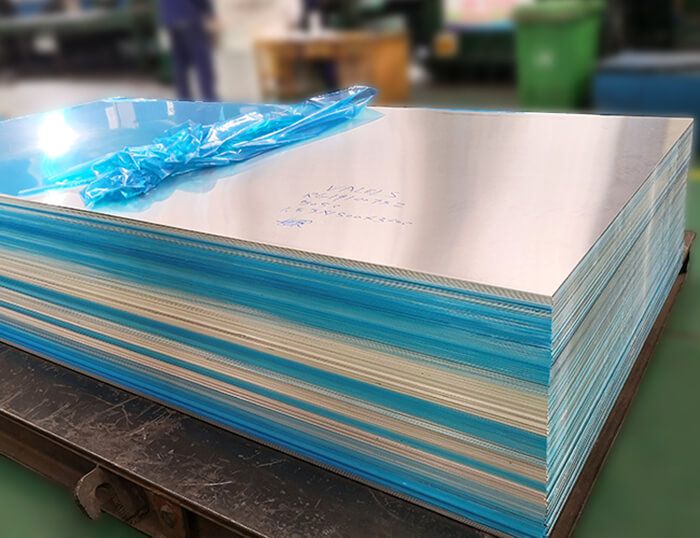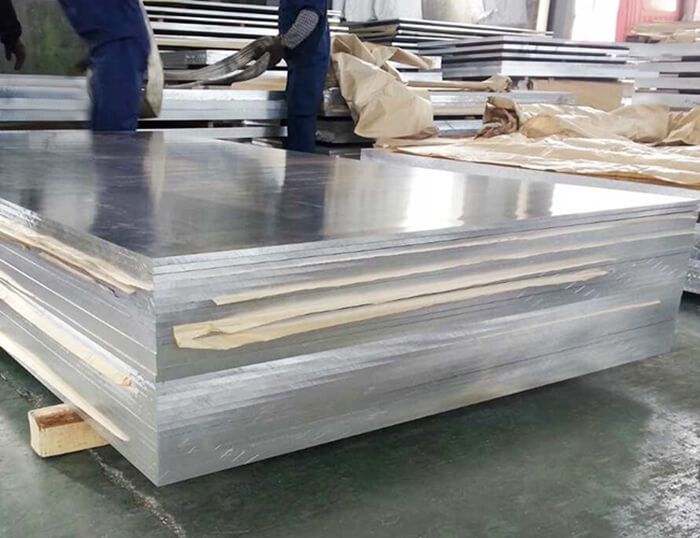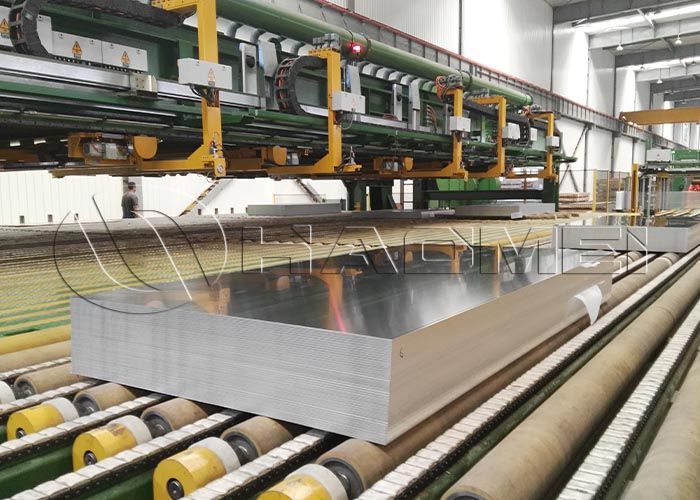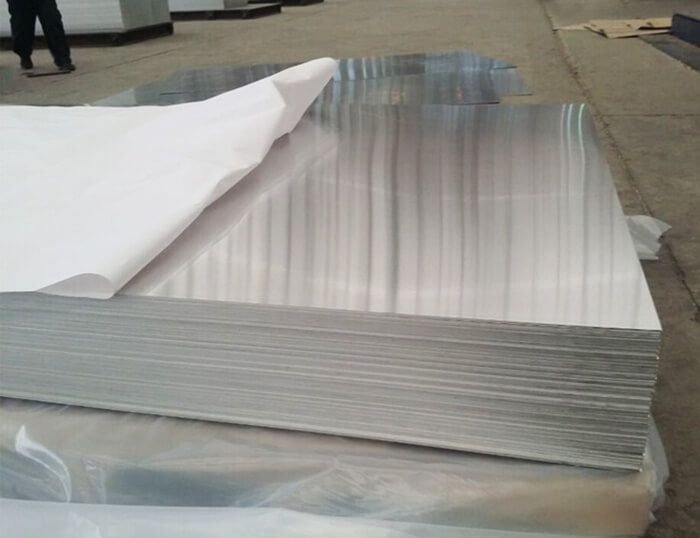


7075 aluminum plate is an Al-Zn-Mg-Cu series of ultra-hard aluminum alloys. Its ultra-high strength stems from a rational chemical composition and precise heat treatment processes. In its core components, zinc (Zn) serves as the main strengthening element, forming intermetallic compounds such as MgZn₂ and Al₂CuMg with magnesium (Mg) and copper (Cu).
After heat treatment, these compounds are dispersed throughout the aluminum matrix, significantly enhancing the alloy's strength. Simultaneously, the addition of a suitable amount of chromium (Cr) refines the grain size, optimizing mechanical properties and corrosion resistance.
This alloy exhibits a yield strength close to its tensile strength, a high yield ratio, and excellent specific strength. Its mechanical properties are stable at room temperature and below 120°C. However, its ductility and high-temperature strength are relatively low, requiring specific heat treatment states to balance the strength-ductility relationship. T6 and T651 are classic states derived from this requirement.
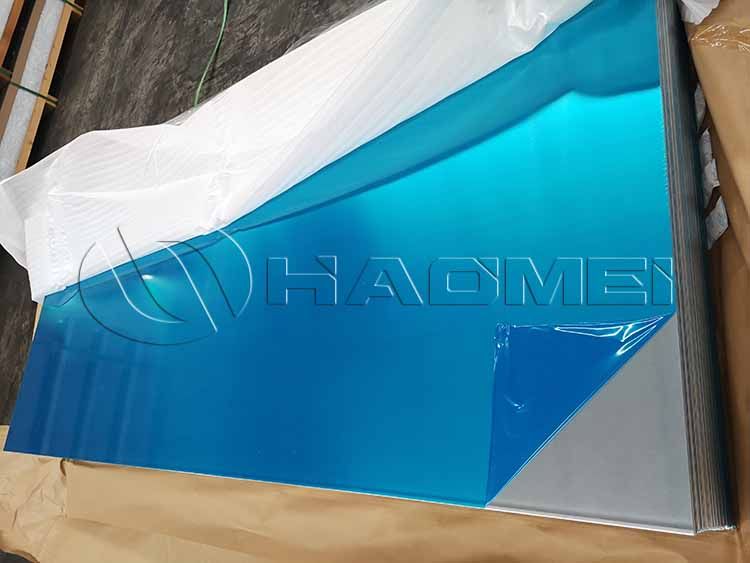
The difference between 7075 t6 and 7075 t651 mechanical properties stems from subtle adjustments in the heat treatment process. The following is a detailed comparison of their core mechanical properties (using 1-10mm sheet metal as an example, a typical commercial thickness range) based on standards such as GB/T3190-2020 and ASTM B209, as well as measured data:
1. In terms of tensile strength (σb), 7075 T6 sheet metal has a tensile strength ≥540MPa, while 7075 T651 sheet metal has a tensile strength ≥550MPa. T651 has a slightly higher tensile strength, primarily due to its pre-stretching process, which refines the precipitated phases and further enhances strength performance.
2. In terms of 0.2% yield strength (σs), the values are quite similar: 7075 T6 sheet metal ≥480MPa, and 7075 T651 sheet metal ≥485MPa. Compared to T6, T651 exhibits better yield strength stability, better ensuring the performance consistency of mass-produced parts.
3. Elongation after fracture (δ) is the core indicator of the difference in plasticity between the two. 7075 T6 sheet has an elongation after fracture ≥8%, exhibiting superior plasticity; while 7075 T651 sheet, due to the pre-tensioning stress release process, sacrifices some plasticity, resulting in an elongation after fracture reduced to ≥6%.
4. In terms of hardness (HBW), both are essentially identical. 7075 T6 sheet has a hardness of 145-150, while 7075 T651 sheet has a hardness between 150-155. The difference lies in the more uniform hardness distribution of T651, which avoids the impact of localized hardness deviations on processing and service.
5. Regarding the elastic modulus (E), since both belong to the 7075 alloy system, their elastic modulus is identical at 71 GPa, demonstrating consistent elastic response under stress and deformation.
6. Regarding fatigue strength (σ-1), 7075 T6 plate has a strength of approximately 155 MPa, while 7075 T651 plate has a strength of approximately 175 MPa. T651 exhibits superior fatigue resistance due to its lower residual stress, effectively reducing the initiation and propagation of fatigue cracks, making it particularly suitable for plate-type structural components subjected to repeated loads.
7. In terms of stress corrosion cracking (SCC) resistance, the difference between the two is significant. 7075 T6 only reaches a moderate level, while 7075 T651, thanks to its pre-stretching process, achieves excellent SCC resistance, demonstrating greater durability in harsh environments such as humidity and salt spray.
Note: When the plate thickness exceeds 10 mm, the strength of both decreases slightly (e.g., tensile strength drops to ≥530 MPa for thicknesses of 10-50 mm), but the trend of performance differences remains consistent. For thicknesses exceeding 50 mm, special rolling processes are required, resulting in a more pronounced strength reduction.
The heat treatment process for the T6 temper is "solution treatment + quenching + artificial aging": The alloy is heated to 470-490℃ and held for a period of time to allow the strengthening elements to fully dissolve in the aluminum matrix. It is then rapidly quenched to room temperature to form a supersaturated solid solution. Finally, artificial aging is performed at 120-150℃ to promote the uniform precipitation of intermetallic compounds, maximizing strength.
With this process, the T6 temper achieves extremely high strength and hardness, but significant residual stress remains after quenching. This stress can easily lead to part deformation and even affect dimensional accuracy during subsequent processing (such as cutting and drilling). However, due to its relatively simple production process and low cost, it is the basic choice for applications requiring high strength. Welcome to get en aw 7075 t6 datasheet from us.
T651 adds a "pre-stretch stress release" process to the T6 process: After quenching, the alloy undergoes controlled cold stretching, typically 1%-3%, to release internal residual stress through plastic deformation, followed by artificial aging. This additional step brings three core advantages:
- Significantly improved dimensional stability: Elimination of residual stress makes parts less prone to warping during machining, assembly, and service, especially suitable for manufacturing high-precision components;
- Optimized machining performance: After stress release, the material's cutting resistance is more uniform, resulting in lower surface roughness after machining, easier assurance of accuracy, and an approximately 20% increase in machining efficiency;
- Improved fatigue resistance and SCC performance: Residual stress is a significant contributing factor to the initiation of fatigue cracks and stress corrosion cracks. The stress-relieving characteristics of T651 increase its fatigue strength by more than 12.5%, making it more durable in harsh environments such as marine and humid conditions.
Original Source:https://www.aircraftaluminium.com/a/what-are-7075-t6-t651-mechanical-properties.html
Tags: 7075 aluminum plate ,
Contact Us