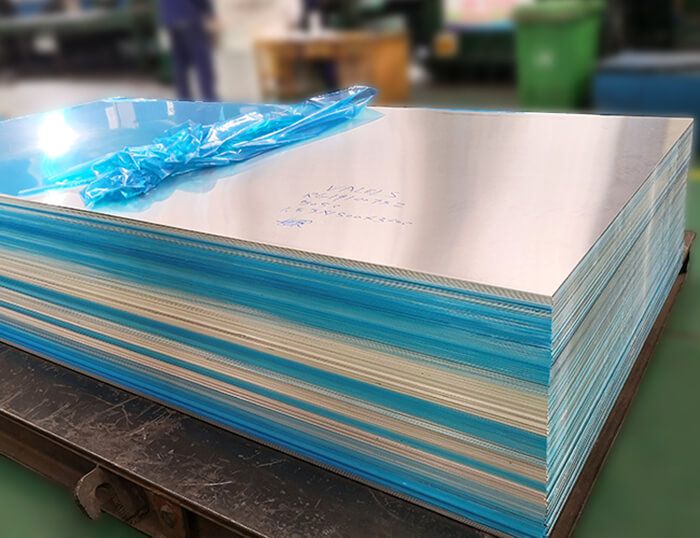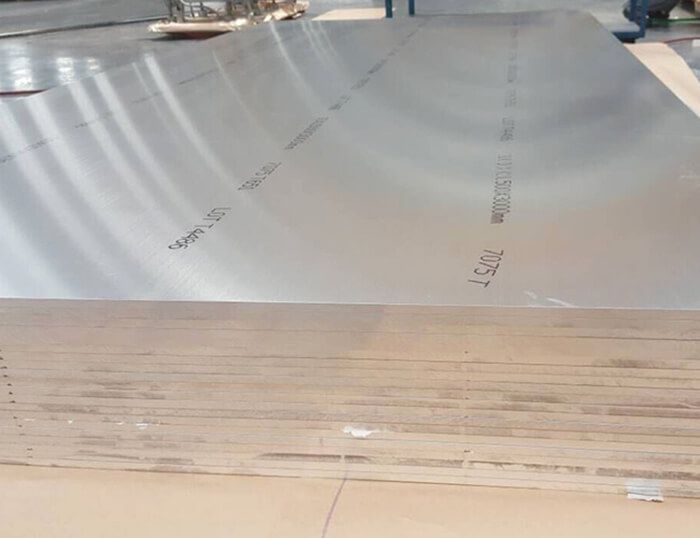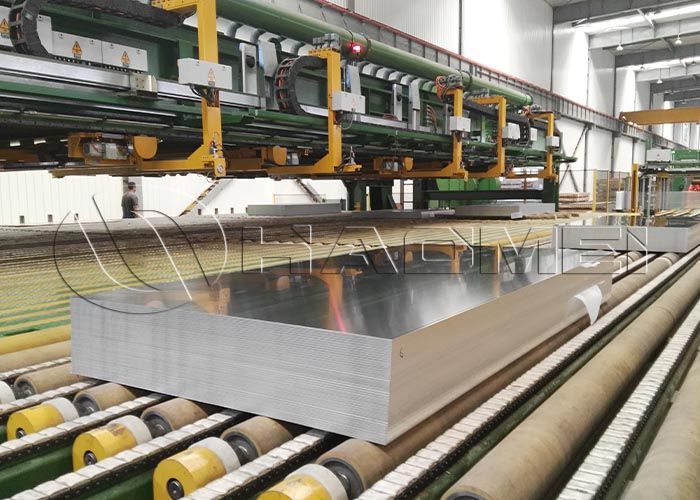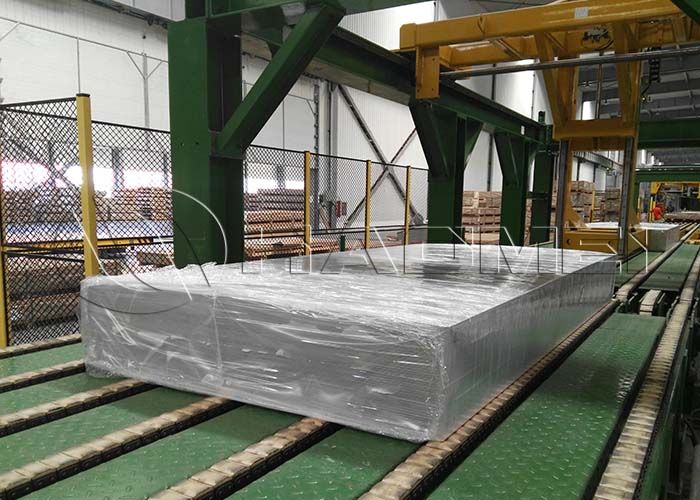


Based on current global market demand data, 2024 thick aluminum plates have a higher penetration and popularity in the international market, while 7075 thick aluminum plates hold an irreplaceable position in high-end, high-strength applications.
The performance difference between 7075 and 2024 thick aluminum plates stems from their different alloy compositions. 2024 belongs to the aluminum-copper-magnesium-manganese alloy system, with copper as its core alloying element (content 3.8%-4.9%).
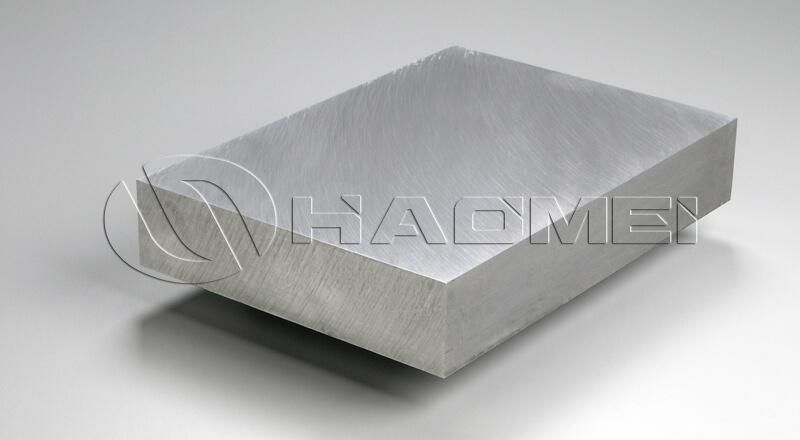
In contrast, thick aluminium plate 7075 belongs to the aluminum-zinc-magnesium-copper superhard alloy system, with zinc as the main alloying element (content 5.6%-6.1%). This difference in composition directly leads to significant differences in strength, corrosion resistance, and processing performance.
In terms of strength, 7075 thick aluminum plates can be considered the "king of strength." Its tensile strength can reach 538-560MPa, yield strength 483-503MPa, and Brinell hardness as high as 150HB. Its strength is close to that of some low-alloy steels. After heat treatment such as T6 and T651, it maintains excellent strength performance in environments below 150℃, with particularly outstanding low-temperature strength.
In comparison, 2024 thick aluminum plate has a tensile strength of 450-483MPa, yield strength of 324-345MPa, and Brinell hardness of 120HB. Although its strength is slightly lower, it possesses superior fatigue resistance and can maintain structural stability under repeated stress. This characteristic makes it highly advantageous in scenarios subjected to cyclic loading.
In terms of processing and corrosion resistance, the two are complementary. 2024 thick aluminum plate has excellent machinability, especially suitable for CNC precision machining, and can be easily manufactured into various high-precision parts. Its weldability is also relatively good (with controlled processes), and only simple surface treatment is needed to meet the corrosion resistance requirements of general working conditions.
7075 thick aluminum plates have poor weldability and are prone to cracking, requiring cladding or special protective measures. Machining them necessitates high-performance tools. However, surface treatments such as anodizing significantly improve their corrosion resistance, making them particularly suitable for complex environments.
Furthermore, 2024 thick aluminum plates outperform 7075 in environments above 125℃, while 7075 has superior thermal conductivity (130-150 W/m·K vs. 2024's 120 W/m·K).
In terms of cost, 2024 thick aluminum plates are more economical. Due to the higher zinc and magnesium content in the 7075 alloy and the more stringent heat treatment requirements, its production cost is significantly higher than that of 2024 thick aluminum plates. This is one of the key reasons why 2024 is more popular in high-end mass-market applications.
The performance differences directly determine the differentiation of their application scenarios, and the demand preferences in the international market precisely reflect this "each fulfilling its own role" pattern.
The core advantage of 2024 thick aluminum plate lies in its "balance," making it suitable for a wider range of applications, which is key to its popularity in the international market. In the aerospace industry, it is the preferred material for aircraft wing skin, fuselage structural components, sheared webs, and wing ribs, as these components need to withstand repeated aerodynamic loads, and fatigue resistance requirements far exceed simple strength requirements.
Besides the aerospace industry, 2024mm thick aluminum sheet is also widely used in transportation (such as truck parts, high-speed train precision components), precision machinery manufacturing (hydraulic valve bodies, couplings, fasteners), and core structural components of electronic equipment. With its good machinability and cost-effectiveness, it has become a fundamental high-end aluminum alloy material with "large usage and wide coverage" in global high-end manufacturing.
7075mm thick aluminum sheet, on the other hand, focuses on high-stress, high-load high-end core applications due to its "ultra-high strength" characteristics, making it a typical "specialized material for high-precision fields." In the aerospace industry, it is mainly used to manufacture core components that withstand extreme loads, such as aircraft landing gear, wing frames, and missile structural components. These components are directly related to the safety performance of equipment, requiring the highest levels of strength and rigidity.
Furthermore, it is widely used in military equipment (armor protection plates, military vehicle frames), high-end mold manufacturing (blow molds, golf ball head molds), high-end sports equipment (bicycle frames, archery components), and marine engineering (yacht components, submersible structural components).
Although its application scenarios are relatively narrow, its irreplaceable role in high-intensity demand scenarios ensures stable international market demand, especially in the military and high-end aerospace manufacturing sectors, where the procurement demand for 7075 thick aluminum plates is inelastic.
Original Source:https://www.aircraftaluminium.com/a/7075-vs-2024-thick-aluminum-plate.html
Tags: 7075 aluminum plate ,
Contact Us