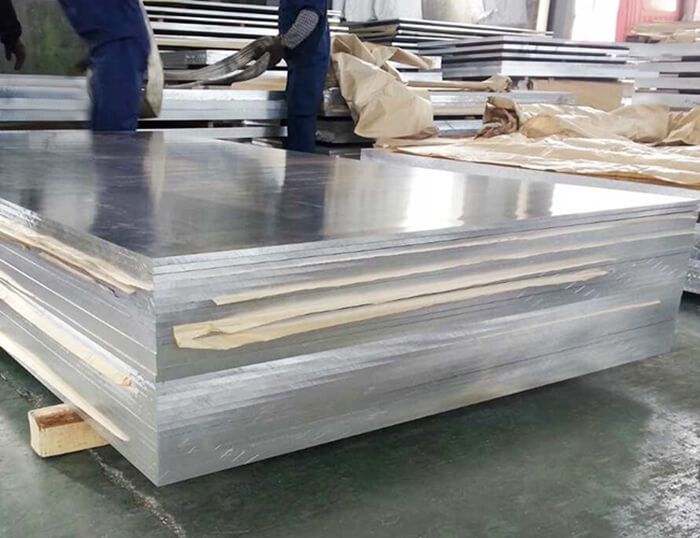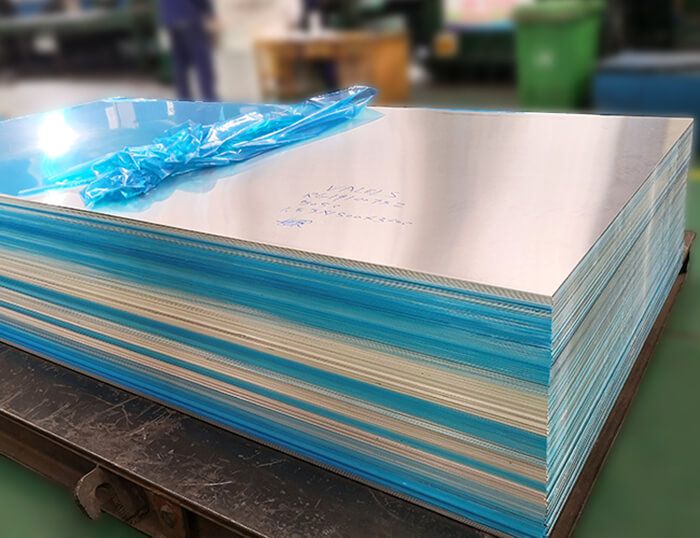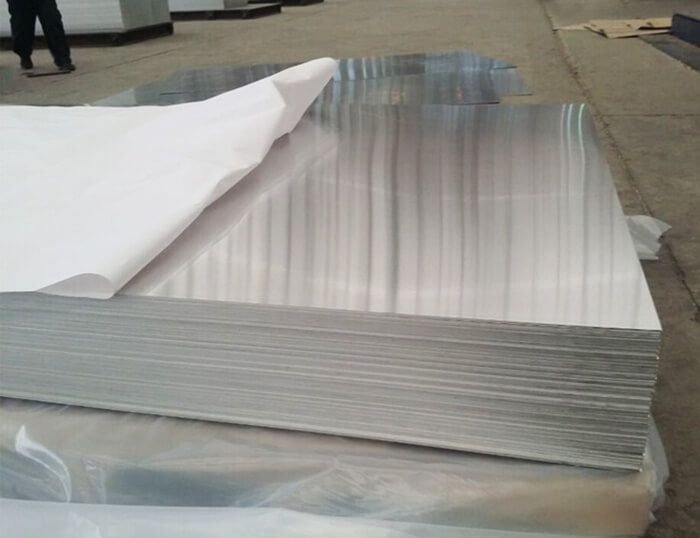


In the field of high-performance aluminum alloys, 7075 series aluminum sheets are renowned as "aerospace hard aluminum" due to their superior mechanical properties and are widely used in key areas such as aerospace and high-end equipment manufacturing. Among them, 7075-T651 and 7075-T351 are two highly representative states within this series.
7075 series aluminum alloys use zinc as the primary alloying element, supplemented by copper, magnesium, and other elements for strengthening. Their performance differences mainly stem from subsequent heat treatment processes. This process difference directly leads to significant differences in key indicators such as strength, plasticity, and dimensional stability between 7075-T651 and 7075-T35.
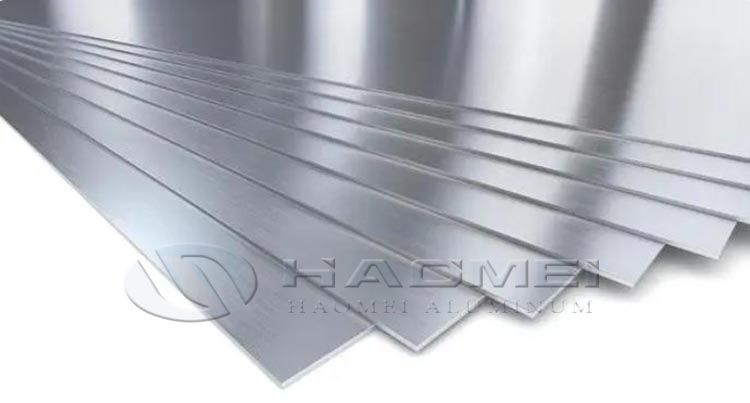
7075-T651 aluminum plate employs a full-process strengthening process of "solution heat treatment + quenching + artificial aging + pre-tensioning stress relief." The pre-tensioning stage can release 0.5%-2% of internal stress, which is crucial for ensuring its performance stability. From a mechanical properties perspective, aluminum sheets in this state exhibit tensile strengths exceeding 540 MPa, yield strengths generally around 460 MPa, and excellent Brinell hardness, easily handling high-wear and high-load working environments.
Furthermore, through dual optimization of artificial aging and pre-stretching, its dimensional stability is extremely strong, making it less prone to deformation during precision machining. This characteristic makes it a core material choice for high-precision components. However, due to the influence of the high-strength strengthening process, its plasticity is relatively limited, with elongation typically between 2% and 9%, making it more suitable for structural parts that do not require complex forming.
The heat treatment process for 7075-T351 aluminum is "solution heat treatment + quenching + natural aging + pre-stretching stress relief." The key difference from T651 is the replacement of artificial aging with natural aging. This process adjustment gives it the characteristics of "low strength, high plasticity": its tensile strength is approximately 470 MPa, and its yield strength is around 325 MPa, both lower than the T651 state, but its elongation can reach over 20%, far exceeding the plasticity performance of T651.
This excellent plasticity endows it with outstanding bending, stamping, and other complex forming capabilities. At the same time, its machinability and spot welding performance are outstanding. After surface treatments such as anodizing and spraying, its corrosion resistance can be further improved, making it more suitable for medium-load components requiring multiple forming processes.
Based on the above performance differences, the application scenarios of 7075-T651 and 7075-T7351 plate are clearly divided, corresponding to the two core requirements of "high load, high precision" and "easy forming, medium load," respectively, covering the manufacturing of key components in different fields.
With its high strength, high dimensional stability, and excellent fatigue resistance, 7075-T651 is widely used in critical fields with stringent material performance requirements: In the aerospace industry, it is the preferred material for core structural components such as aircraft fuel tank supports, wing bulkheads, and landing gear, directly bearing the main loads of the fuselage; in the semiconductor industry, it is used to manufacture high-precision components such as tooling fixtures and vacuum chucks, ensuring the stability and accuracy of chip processing.
In the medical field, it can be used in surgical instrument templates and core components of imaging equipment, meeting the dual requirements of biocompatibility and dimensional accuracy; in addition, it also plays an important role in automotive manufacturing (injection molds, high-strength structural components for car bodies) and the shipbuilding industry (seawater corrosion-resistant load-bearing components).
Leveraging its high plasticity and ease of processing, 7075-T351 is more suitable for medium-load components requiring complex molding processes: In the aerospace field, it can be used for aircraft frame auxiliary structures, rivets and other non-core load-bearing components, as well as components operating below 150℃; in the high-end equipment manufacturing field, it is an important material for industrial robot harmonic reducer housings and lightweight armor plate laminate structures.
In the automotive industry, it is suitable for suspension system auxiliary components and chassis trim parts that require bending and forming in high-performance vehicles; in addition, its lightweight and easy-to-mold advantages are also fully utilized in high-end sports equipment (bicycle frames, mountaineering buckles), precision instrument housings, and other fields.
Original Source:https://www.aircraftaluminium.com/a/7075-t651-vs-7075t351-aluminum-plate.html
Tags: 7075 aluminum plate ,
Contact Us